
What the Arctic Taught Me About Leadership
Stuart Thornhill


What the Arctic Taught Me About Leadership, Resilience and Business Success


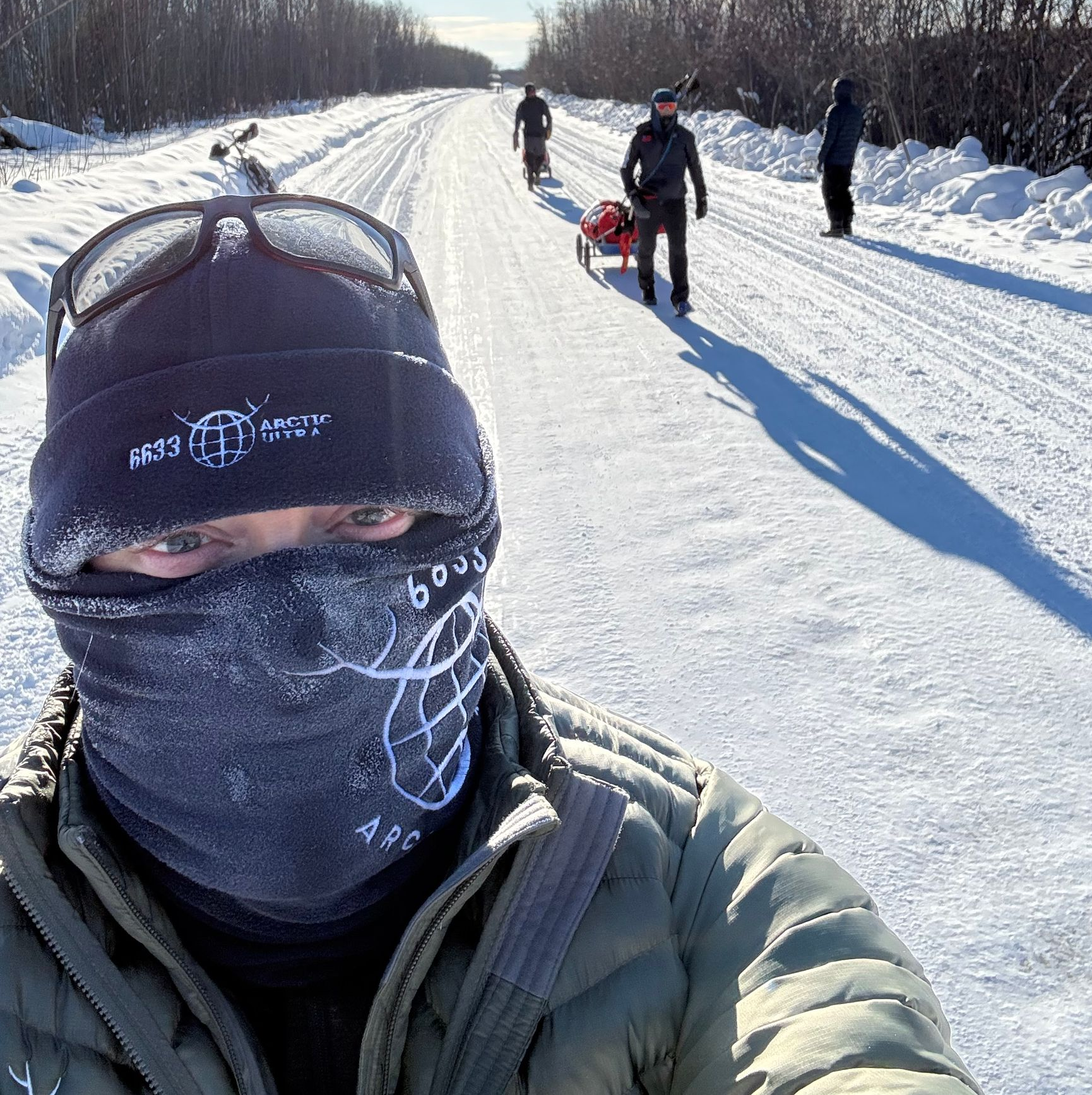
Over the years I've had the privilege of leading businesses through periods of growth, transformation and uncertainty. I've also spent countless hours directing and supporting participants in some of the world's toughest endurance events through the 6633 Arctic Ultra.

At first glance, business leadership and pulling a sled across the Arctic in temperatures below -40°C appear to have very little in common. One takes place in boardrooms and video calls, the other on frozen rivers and remote wilderness trails.

In reality, they share far more than most people realise.

The lessons I've seen repeatedly in endurance athletes are often the same traits that separate successful leaders and businesses from those that struggle when conditions become difficult.


1. Success Comes From Consistency, Not Heroics


Many people approach both endurance events and business growth believing success comes from extraordinary effort.

The reality is usually much less glamorous.


The athlete who finishes a multi-day Arctic race isn't normally the fastest, strongest or most talented competitor. More often, they're the person who continues to put one foot in front of the other hour after hour, day after day.

Business is remarkably similar.


Most successful organisations aren't built through one brilliant strategy, one exceptional quarter or one heroic leader. They're built through consistent execution, disciplined decision-making and the ability to keep moving forward when progress feels slow.

The organisations that win are rarely the ones sprinting. They're the ones still moving when others have stopped.


2. Resilience Is About Adaptation, Not Toughness


When people hear the word resilience, they often think of grit, determination and simply pushing harder.

My experience says otherwise.


In the Arctic, conditions can change rapidly. Weather shifts, equipment fails, injuries occur and carefully prepared plans quickly become obsolete. The athletes who succeed aren't necessarily the toughest; they're the most adaptable.

The same principle applies in business.


Markets change. Competitors emerge. Regulations evolve. Funding disappears. Customers behave differently than expected.

The leaders who thrive aren't those who stubbornly stick to the original plan. They're the ones who remain focused on the destination whilst being flexible about the route.


Resilience isn't about refusing to bend.


It's about bending without breaking.


3. Your Mind Gives Up Before Your Potential Does


One of the most fascinating things I've observed in endurance sport is that people rarely stop because they've reached their physical limit.


More often, they stop because they've reached a perceived limit.

The same happens in business.


Leaders face setbacks, uncertainty, criticism and periods where results don't arrive as quickly as expected. During these moments it's easy to question decisions, lose confidence or become distracted by short-term pressures.


What separates high performers isn't the absence of doubt. It's their ability to continue despite it.


The best endurance athletes and business leaders develop the ability to remain calm, maintain perspective and focus on the next step rather than becoming overwhelmed by the size of the challenge ahead.


Final Thoughts


Whether I'm coaching executives, leading a business or standing at the start line of a 6633 Arctic Ultra event, I've come to the same conclusion:


Success is rarely about talent alone.


It's about consistency when motivation fades, adaptability when plans change, and the ability to keep moving forward when conditions become uncomfortable.


The environment may differ, but the principles remain the same.


And perhaps that's why endurance sport continues to be one of the most powerful leadership development experiences available. It strips away complexity and reminds us of a simple truth:


When things get tough, progress belongs to those who keep going.


#Leadership #Resilience #ExecutiveCoaching #EnduranceSport #BusinessLeadership #6633ArcticUltra #Performance #GrowthMindset


By Stuart Thornhill June 8, 2026
What season is your company in, and do you have the right leader?! One of the biggest mistakes organisations make is assuming that a successful leader in one environment will automatically succeed in another. In my experience, that simply isn't true. Over the years I've worked with organisations facing rapid growth, significant transformation, commercial challenges and, on occasion, genuine crisis. I've also spent a great deal of time studying leadership in some of the harshest environments imaginable, from the Arctic to the boardroom. One observation keeps resurfacing: Different situations require different types of leaders. We often talk about leadership as though there is a single formula for success. History suggests otherwise. Take Sir Winston Churchill. Churchill is rightly remembered as one of history's greatest leaders. During the Second World War his courage, conviction and refusal to accept defeat helped inspire an entire nation. Britain needed a wartime leader. It needed somebody capable of making difficult decisions, taking risks and providing unwavering direction during a period of existential threat. Yet shortly after victory in Europe, Churchill lost the General Election. His leadership hadn't suddenly become ineffective. The environment had changed. The British people no longer needed a wartime leader. They needed someone who could focus on rebuilding communities, creating social infrastructure and delivering long-term stability. The qualities that made Churchill exceptional during crisis were not necessarily the same qualities required during peace. It raises an interesting question for modern organisations: Are we choosing leaders based on what the organisation needs today, or based on what worked yesterday? I increasingly see three broad leadership archetypes. The first is the Crisis Leader . These leaders thrive when uncertainty is high and the stakes are even higher. They are decisive, resilient and comfortable making difficult calls with incomplete information. They can rally people behind a cause and provide clarity when chaos surrounds them. Every organisation will need this type of leader at some point. The second is the Growth Leader . These individuals excel when stability exists and opportunities for growth are abundant. They focus on culture, systems, talent development and sustainable performance. They create environments where people can thrive and where organisations can scale effectively over the long term. These leaders are often less visible than crisis leaders, but their impact can be equally significant. The third type is the rarest. The Adaptive Leader . These are the individuals capable of moving between crisis and calm. They know when to take command and when to empower others. They understand that leadership is not about applying a fixed style but about responding appropriately to the circumstances in front of them. History offers examples such as Abraham Lincoln and Nelson Mandela. Leaders who could navigate immense turmoil while simultaneously laying foundations for long-term prosperity and reconciliation. The reality is that most organisations don't fail because they lack good leaders. They fail because they have the wrong leader for the season they are in. I've seen founders who were brilliant at creating businesses struggle to scale them. I've seen exceptional operational leaders falter during periods of major disruption. Equally, I've seen transformational leaders continue to operate in crisis mode long after the emergency has passed, creating fatigue and instability where neither is needed. The challenge for boards and leadership teams is not identifying the "best" leader. The challenge is identifying the leader best suited to the current environment. As leaders, we should ask ourselves the same question. Am I leading the organisation I have today, or the organisation I had twelve months ago? The answer may determine whether we continue to create value or become the very obstacle holding it back. The greatest leaders are not necessarily those who dominate every situation. They are the ones who recognise when the season has changed and have the self-awareness, humility and adaptability to change with it. Leadership is not a fixed set of behaviours. Leadership is the ability to accurately diagnose the environment and adapt your approach accordingly. 
By Stuart Thornhill June 5, 2026
For years, leadership development has focused heavily on the qualities of great leaders. We celebrate visionaries, strategists, innovators and crisis managers. Yet one question is often overlooked: What if leadership success is determined as much by the environment as it is by the leader? This has led me to think about environmental factors and existing thinking, such as Situational Leadership (Hersey and Blanchard) or Fiedler's Contingency Theory and whether there is further progress to be made in this space. At the core I think this is a simple proposition: "The right leader in the wrong environment can be as damaging as the wrong leader in the right environment." The theory suggests that organisations typically operate within one of three distinct environments or Seasons: Crisis Environment Where survival is the priority. Decisions must be made quickly, uncertainty is high and strong direction is often required. Growth Environment Where stability exists and the focus shifts to innovation, empowerment, culture and sustainable expansion. Transition Environment Where organisations move from one state to another through transformation, restructuring, succession or strategic change. Each environment demands different leadership behaviours, communication styles, decision-making approaches and personal attributes. History provides countless examples. Some leaders thrive during crisis but struggle when stability returns. Others excel during periods of growth yet falter when faced with existential threat. A smaller number appear capable of adapting their style to meet the demands of all three environments. Perhaps the question is not, "Who is the best leader?" Perhaps it is, "Who is the right leader for the environment we are operating in today?" Over the coming weeks I will be exploring each environment in more detail and sharing my thoughts on how leaders can recognise the environment they are in and adapt accordingly. Because leadership is not just about capability. It's about context. So what Season is your organisation in and which leader are you?