Leadership Resilience
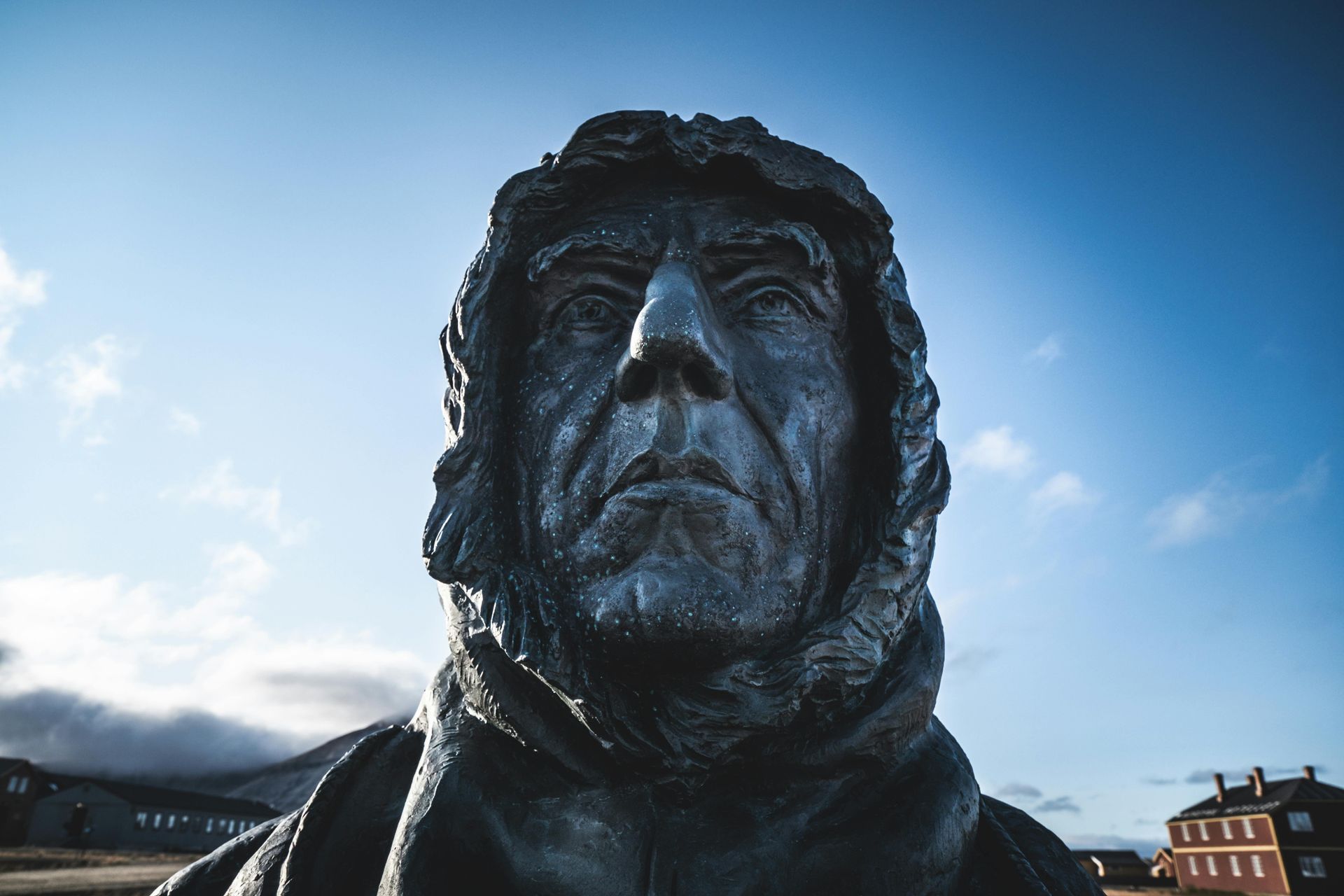
Lessons from the Arctic, the Boardroom and History's Greatest Leaders.
Leadership has never been easy.
Whether you're building a start-up, leading a scaling business, managing investors, carrying payroll responsibility, or navigating organisational change, leadership often feels lonely, uncertain and relentless.
The reality is that most leadership books focus on strategy, vision and execution. Far fewer talk honestly about resilience.
Yet resilience is often the defining factor between those who survive difficult periods and those who don't.
As someone who has spent over 25 years in executive leadership roles and who has also directed and participated in some of the world's most challenging endurance events, I've become increasingly convinced that resilience is not a nice-to-have leadership quality. It is the foundation upon which all sustainable success is built.
History repeatedly reinforces this lesson.
Ernest Shackleton: Leadership When Everything Goes Wrong
Few leadership stories are as powerful as that of Ernest Shackleton.
In 1915, his ship, Endurance, became trapped and eventually crushed by Antarctic ice. His mission failed. His expedition objective was never achieved. Yet Shackleton is remembered as one of history's greatest leaders because he brought every member of his team home alive.
His achievement wasn't strategy. It wasn't growth. It wasn't execution. It was leadership under extreme adversity.
When circumstances changed, he abandoned the original plan and focused entirely on what mattered most. He controlled what he could control and ignored what he couldn't.
For today's founders and executives, the lesson is obvious. Markets change. Investors disappear. Contracts fall through. Economic conditions deteriorate. The leaders who survive are not always the smartest. Often, they are simply the most adaptable.
Sir Ranulph Fiennes: One Step at a Time
Sir Ranulph Fiennes has often been described as the world's greatest living explorer.
What fascinates me about Fiennes isn't his achievements—although they are extraordinary. It's his approach. Crossing polar ice caps, climbing Everest after a heart attack, completing expeditions that most people would consider impossible, he consistently demonstrates a simple principle:
Don't focus on the entire journey. Focus on the next step.
Entrepreneurs frequently become overwhelmed by the scale of what lies ahead. Funding rounds. Growth targets. Recruitment challenges. Regulatory hurdles. Cashflow pressures. The list never ends.
The strongest leaders I've worked with have an ability to break seemingly impossible situations into manageable actions.
When you're staring into uncertainty, you don't need all the answers. You simply need the discipline to take the next step. Then the next. Then the next.
Winston Churchill: Maintaining Belief When Others Don't
Leadership often means carrying belief long before there is evidence. Few leaders demonstrated this better than Winston Churchill.
During the darkest days of the Second World War, when many believed defeat was inevitable, Churchill's role was not simply strategic.
His job was to maintain belief. To project confidence without becoming detached from reality. To acknowledge difficulties without surrendering to them.
Every founder and CEO will recognise this challenge.
There will be moments when your team looks to you for certainty that you simply do not possess. You cannot guarantee outcomes. You cannot predict the future. But you can provide confidence, stability and direction.
People don't expect leaders to have all the answers. They do expect leaders to keep moving forward.
Nelson Mandela: The Power of Perspective
Nelson Mandela spent 27 years imprisoned. Most people would emerge angry and bitter. Mandela emerged focused on reconciliation and nation-building.
What allowed him to do that?
Perspective.
One of the most important resilience skills leaders can develop is the ability to separate temporary difficulty from permanent failure. A difficult quarter is not the end. A failed funding round is not the end. A lost client is not the end. A business setback is rarely fatal unless we convince ourselves it is. Perspective allows leaders to make better decisions under pressure.
The Modern Leadership Reality
The social media version of entrepreneurship is often glamorous.
The reality is very different.
Most successful businesses are built through years of uncertainty, difficult decisions, personal sacrifice and relentless persistence.
I've experienced business success. I've experienced failure. I've led large corporate operations and scaling businesses. I've sat in boardrooms discussing strategy and financing. I've also spent countless hours in Arctic environments where poor decisions carry immediate consequences.
The environments are different. The lessons are remarkably similar. Success rarely belongs to the strongest. It rarely belongs to the smartest. It almost always belongs to those who remain standing when others stop.
Three Practical Resilience Habits for Leaders
1. Separate Events from Identity
A setback is an event.
It is not who you are. Leaders who personalise failure often struggle to recover from it.
- Learn from it.
- Adapt.
- Move forward.
2. Build Recovery into Your Leadership
Constant pressure creates diminishing returns.
The best leaders understand the importance of recovery.
For me, that often means stepping away from the boardroom and into the outdoors.
Adventure, endurance events and challenging environments provide a unique reset.
Distance frequently creates clarity.
3. Focus on Controllables
One of the greatest sources of leadership stress is obsessing over things beyond our control.
- Markets.
- Politics.
- Competitors.
- Investor sentiment.
- Focus instead on what you can influence today.
- Execution.
- Culture.
- Decision-making.
- Relationships.
- Consistency.
The leaders who do this tend to outperform those who don't.
Final Thoughts
Resilience is not about being fearless. It is not about pretending everything is fine. It is not about never feeling pressure. Resilience is the ability to keep moving despite uncertainty.
Shackleton did it on Antarctic ice. Churchill did it during war. Mandela did it through imprisonment. Fiennes continues to do it through exploration and adversity.
Modern business leaders face different challenges, but the principle remains unchanged. Leadership is rarely tested when things are going well. Leadership reveals itself when things aren't.
And in those moments, resilience becomes your greatest competitive advantage. The question isn't whether adversity will come. It will. The question is whether you'll be ready when it arrives.
#Leadership #Resilience #ExecutiveLeadership #Entrepreneurship #StartupLeadership #CEO #ExecutiveCoaching #LeadershipDevelopment #BusinessGrowth #Founders #BoardLeadership #MentalResilience #AdventureLeadership #HighPerformance #LeadershipLessons #SirRanulphFiennes #ErnestShackleton #WinstonChurchill #NelsonMandela #ExecutiveCoach